Page 1 of 1
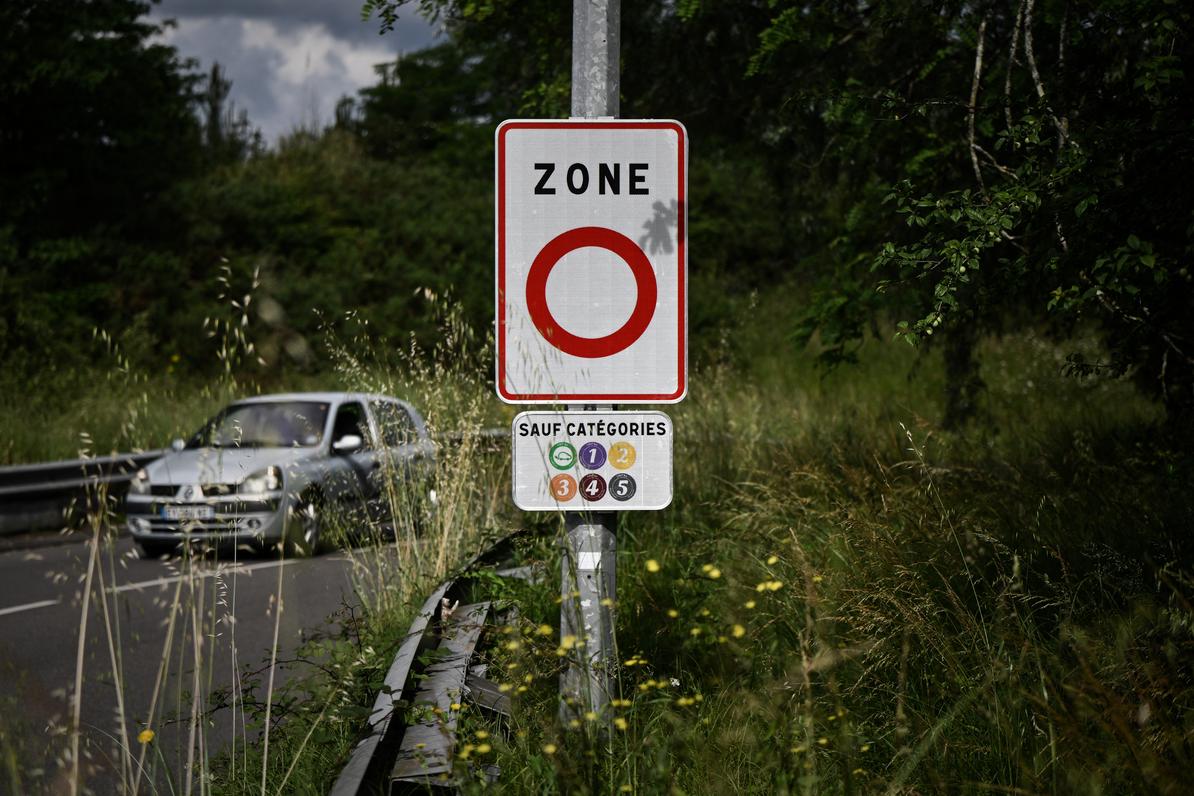
The ZFEs, les Zones à Faibles Émissions, back again
Posted: Fri May 22, 2026 11:10 pm
by RobertArthur
Already yesterday's news in Lefigaro, Thursday 21 May. MPs had decided in to repeal
the ZFEs, but the Constitutional Council has just overturned that decision. As a result, 43 low-emission zones are now back in force.
Their demise was short-lived. The low-emission zones (LEZs), which had been abolished just over a month ago during the vote on the ‘economic simplification’ bill on 15 April, are making a comeback. It is the Constitutional Council that has, in a sense, revived this much-criticised measure, which stemmed from the Climate and Resilience Act of 22 August 2021. This law prohibits the most polluting vehicles from driving in several major urban areas to improve air quality.
On Thursday the Constitutional Council decided to strike down Article 37 of the law containing this abolition, ruling that it constituted a legislative rider. In other words, this article, which had been introduced during the debates, has, in their view, no connection with the law as a whole and is therefore contrary to the Constitution. “The existence of this connection must be assessed in light of the purpose of the original text and the general structure of its provisions, and not solely on the basis of the title of the law…”
The ZFEs, les Zones à Faibles Émissions, back again
Posted: Sat May 23, 2026 12:38 am
by exile
Excellent.
Except that the same rules in Germany showed around 2010 that in a city such as Cologne*, the effect on air quality and micro-particulates was a big zero.
* near where I was living at the time.
Now to be fair, I am not sure that would apply to all parts of France. As I drove down into the nearby valley this morning, I could admire the peaks of the Vercors and the Ecrans beyond but the Rhone valley was shrouded in mist - but I know this mist is trapped air pollution.
It is fine for cities such as Lyon and Marseille to envoke Crit Air principles, but you can drive through and around Lyon via the A6 A7 and its ring roads without restriction and between the two cities there are no other restrictions. Ergo the Rhone valley becomes heavily polluted with exhaust fumes - and especially at this time of year with increasing temperatures, holiday periods and a major influx of traffic travelling down a valley that only has real ventilation when there is wind blowing from the South or North. Current wind speed are close to zero, as they are for much of the summer.
The ZFEs, les Zones à Faibles Émissions, back again
Posted: Sat May 23, 2026 8:46 am
by Blaze
The subject of air quality in Saint-Malo (population about 48,000) often rears its head. We often hear that there is a "peak of fine particle pollution" and that sometimes the air quality is qualified as "mauvais". Whilst not officially confirmed, the main culprit has to be the company that produces fertilisers since testing shows that the air is regularly polluted with ammonia. But there lies the rub. This particular industry, Timac Agro, is a multinational which has been condemned for polluting for years. They just pay the pathetic fines and carry on. It's a huge employer in the area and no-one seems to dare challenge the group (no doubt there's a lot more to it than that). In the meantime, the medical people continue to insist that the lives of the inhabitants of Saint-Malo are at risk. As yet, no local council has made any significant move to do anything about it.
The ZFEs, les Zones à Faibles Émissions, back again
Posted: Sat May 23, 2026 10:30 am
by RobertArthur
@ Exile, the German experience also around 2010, the so called
"Umweltzonen". The ADAC - Europe's largest automobile association, headquartered in Munich - often considers traditional low-emission zones and the particulate matter sticker to be largely ineffective. A lovely green sticker on my windscreen next to the French one. Maybe I shouldn’t travel to other EU countries for the time being, because then I won’t be able to see a thing through my windscreen, 27 EU countries...
According to this motoring organisation, in practice these zones have not led to the significant improvements in air quality in major cities that were hoped for. Barely measurable differences: ADAC tests showed no significant differences in air quality between cities with and without low-emission zones. Weather conditions (wind, rain) often have a greater influence on particulate matter levels than keeping older vehicles off the roads. Exceptions and scope: numerous exceptions (e.g. for classic cars) and the fact that modern petrol engines in many places do not have particulate filters undermine the effectiveness. The requirement for electric cars to display a sticker is also criticised as bureaucratic. Alternatives are more effective: the ADAC instead advocates for improved traffic flow, the ‘green wave’, the expansion of public transport, and more modern emissions standards. The fact that the ADAC’s criticism cannot be dismissed is demonstrated by developments on the ground: many German cities (such as Hanover and Dortmund) have already abolished their low-emission zones because air quality targets have been met or the zones are now considered obsolete.
Although the ADAC classifies low-emission zones as somewhat flawed or ineffective, the green sticker remains mandatory in the remaining low-emission zones in Germany. Anyone entering without the appropriate sticker risks a fine. Driving in a German "Umweltzone" without the required emissions sticker (Umweltplakette) will result in a standard fine of €100. This applies to both German and foreign-registered vehicles. In 2025 new driving bans for Euro 4 and Euro 5 diesel vehicles. Even if I hadn’t stopped driving my old Mercedes diesel, I’m afraid
this booklet wouldn’t help me either when approaching
a sign like that.