
Voitures Anciennes
-
RobertArthur

- Posts: 2913
- Joined: Sat Jul 17, 2021 3:10 pm
- Location: Nièvre
Voitures Anciennes
@ Curtis, in the Musée National De L’Automobile in Mulhouse only a Fiat 500, not the special need for speed Abarth model. One of its immediate neighbours in the museum is the NSU Ro80 of Chris le Bricoleur.


-
curtis
- Posts: 582
- Joined: Fri Jul 23, 2021 1:36 pm
- Location: Charente Maritime
Voitures Anciennes
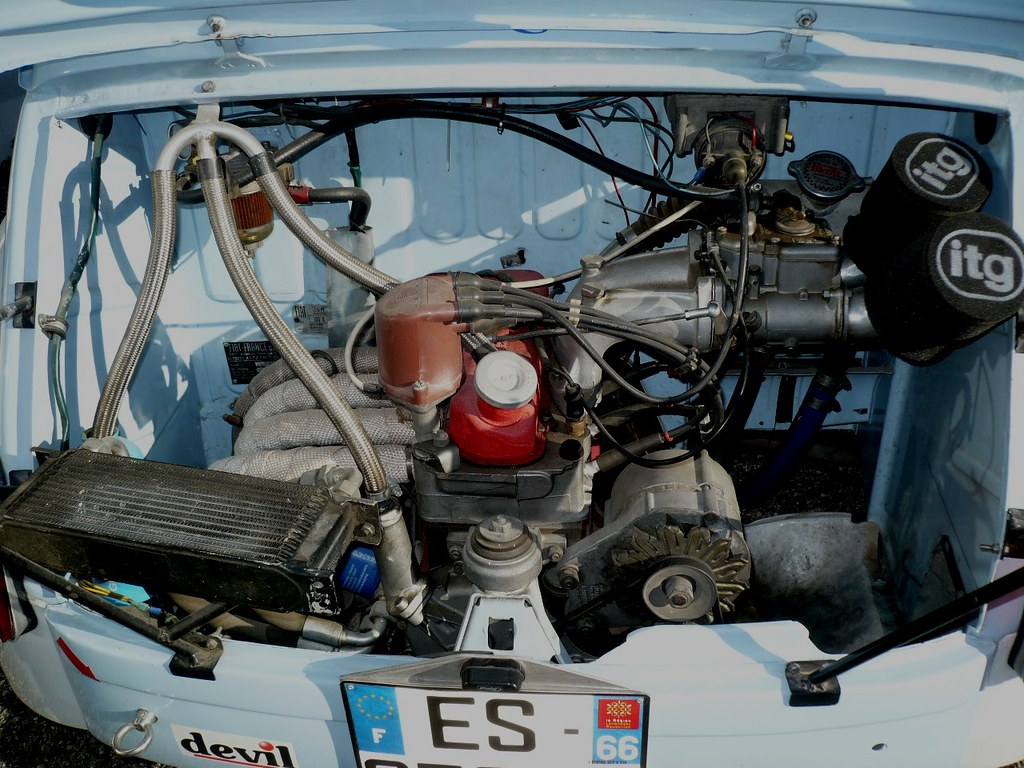
Yes, not at all like mine !! Avec ma chérie il n"est pas possible de passer inaperçu . The base is a Fiat 600 and it is a very good replica of the 850TC. Engine is 903cc with a Weber 40DCOE.
-
RobertArthur
- Posts: 2913
- Joined: Sat Jul 17, 2021 3:10 pm
- Location: Nièvre
-
curtis
- Posts: 582
- Joined: Fri Jul 23, 2021 1:36 pm
- Location: Charente Maritime
Voitures Anciennes
It's fitted to the 600 gearbox but the water radiator which was in the back is now in the extended body at the front. Otherwise there would be no room for the Weber. Specially made exhaust. Discs all round and different suspension.
 Fiat suspension avant by john curtis, sur Flickr
 P1050486 by john curtis, sur Flickr
Fiat suspension avant by john curtis, sur FlickrP1050486 by john curtis, sur Flickr-
RobertArthur
- Posts: 2913
- Joined: Sat Jul 17, 2021 3:10 pm
- Location: Nièvre
-
RobertArthur
- Posts: 2913
- Joined: Sat Jul 17, 2021 3:10 pm
- Location: Nièvre
Voitures Anciennes
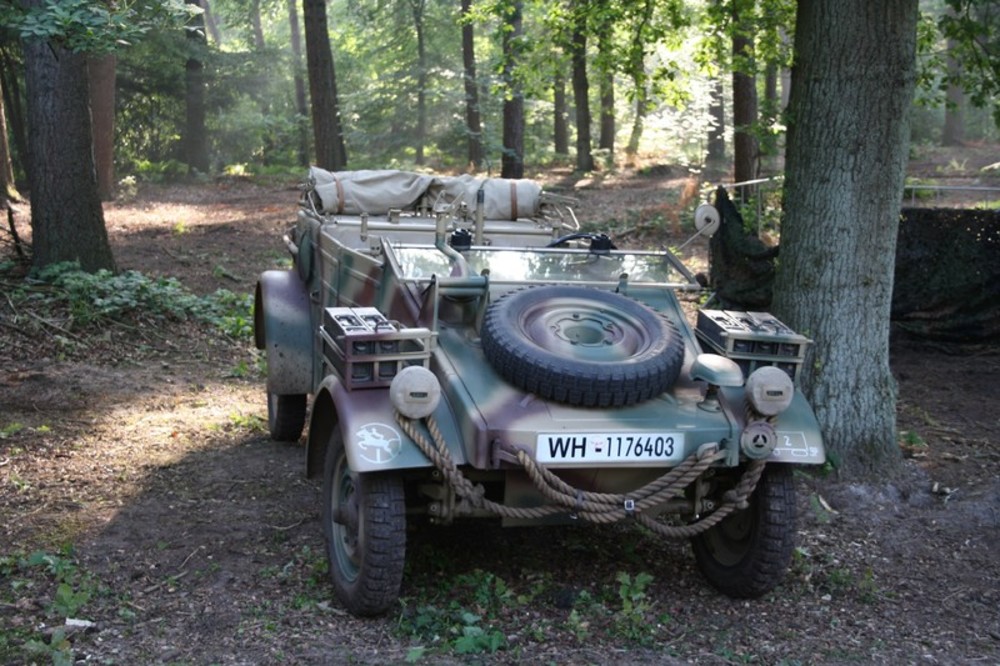
About the birth of the VW transporter. In the shadows of World War II the Germans, under the leadership of British case officer Major Ivan Hirst, did manage to set up a production line for the Beetle. The first customers in 1946 were the British occupation army and the German postal services. The claims of pre-war KDF bidders ('Kraft durch Freude') were conveniently ignored ( artist's impression 1938). Other priorities: from 1940 the KDF production facilities started to make the 'Kübelwagen' for the German Wehrmacht. Not the original KDF, as the ordinary KdF-Wagen was not suitable as an off-road vehicle, Ferdinand Porsche developed a separate version. This model was known as Porsche Typ 62. It had a rectangular steel body, designed by Erwin Komenda who worked at Porsche from 1931. Unlike the KdF-Wagen (two-doors), the Typ 62 was four-doors.
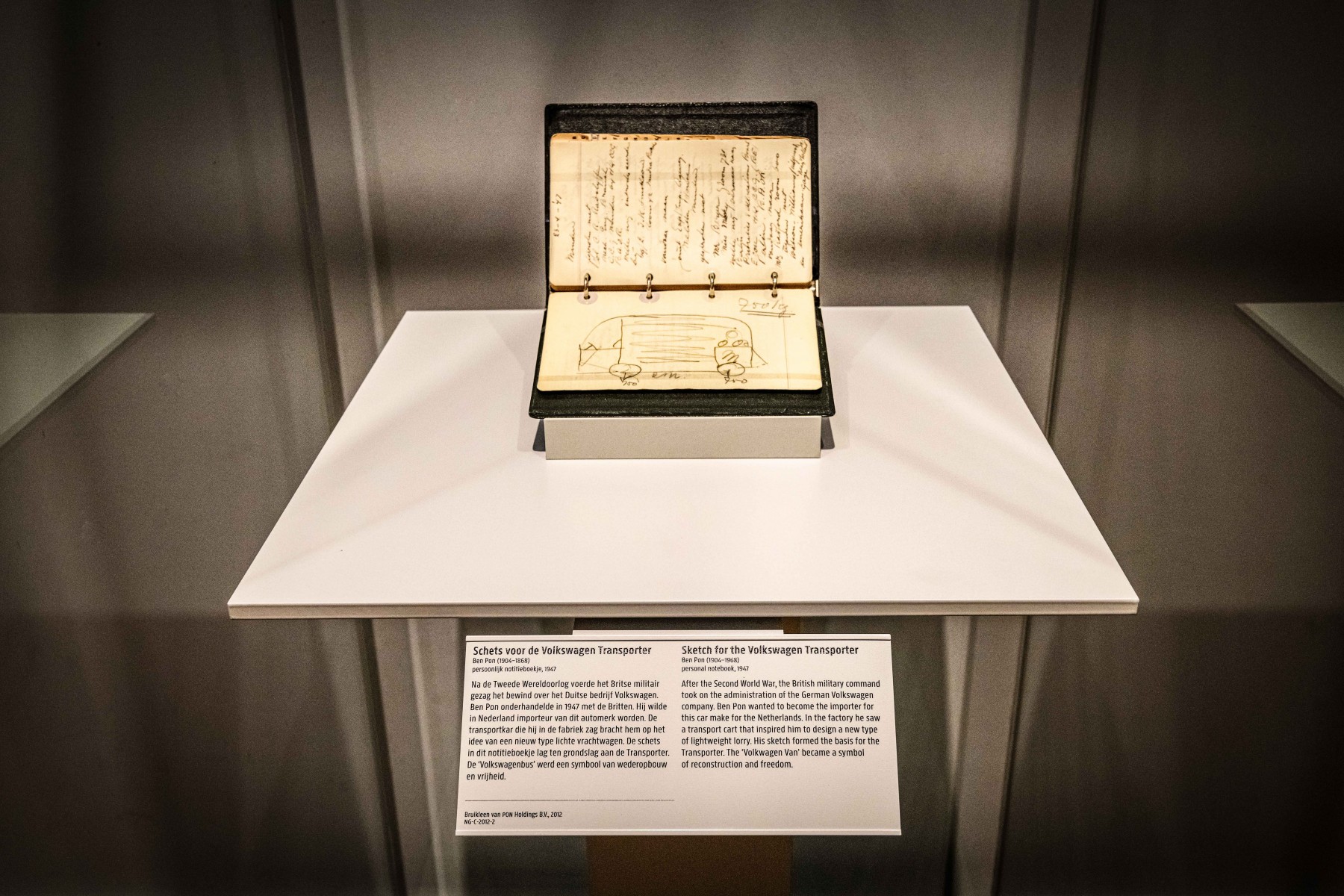
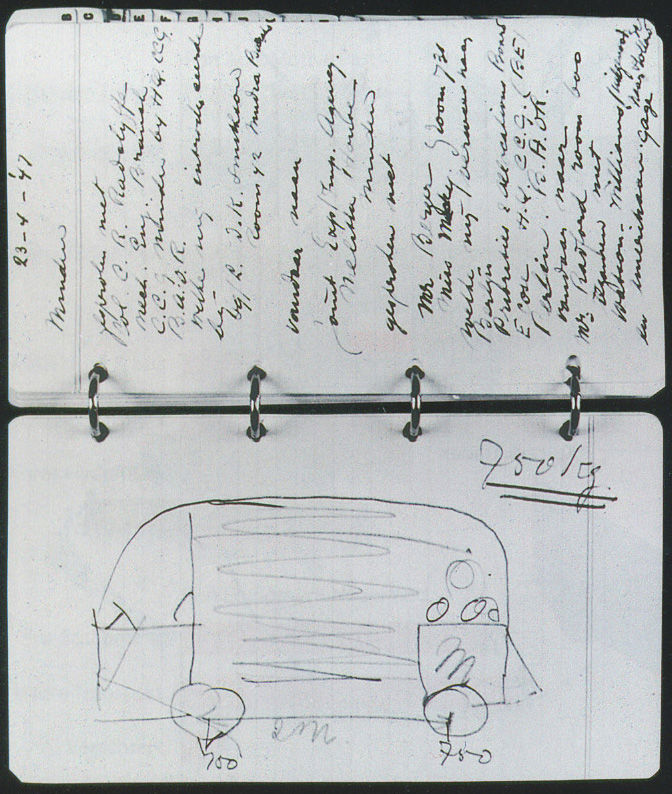
On 23 April 1947, Ben Pon, car dealer from Amersfoort (Netherlands), visited the Volkswagen factory in Germany. With a simple sketchbook under his arm and with this quick, simple sketch, almost a kindergarten drawing. He got inspired when visiting the VW works earlier by a so called ' Plattenwagen' for inside factory use, driver seat above the little VW engine, rearside of this transporter. Not allowed he was told by the Netherlands Vehicle Authority when presenting the idea, driver's seat should be in front of the car. Back to his little drawingboard, pen and paper, no CAD/CAM software available, a second sketch was born...He tells the VW managers that there is a great need for practical vans in the Netherlands. You only have to use the basic design elements of the beetle and the 'Plattenwagen'. The engineers picked up this idea and started designing and building prototypes between 1947 and 1949.
The Transporter entered the market in 1950 as ‘Typ 2’, alongside the ‘Typ 1’, the Beetle. Production started modestly with ten vans a day. However, demand was huge. As many as 8,000 were built the first year, and an additional factory was even needed in 1955. Of the first Transporter generation (T1), 1.8 million were built until 1967. This Volkswagen van grows into an icon. To this day, 13 million of them have been sold worldwide and 75 years on, the sketch is part of the Rijksmuseum's collection. After an exhibtion now in the historical library of this museum.


On 23 April 1947, Ben Pon, car dealer from Amersfoort (Netherlands), visited the Volkswagen factory in Germany. With a simple sketchbook under his arm and with this quick, simple sketch, almost a kindergarten drawing. He got inspired when visiting the VW works earlier by a so called ' Plattenwagen' for inside factory use, driver seat above the little VW engine, rearside of this transporter. Not allowed he was told by the Netherlands Vehicle Authority when presenting the idea, driver's seat should be in front of the car. Back to his little drawingboard, pen and paper, no CAD/CAM software available, a second sketch was born...He tells the VW managers that there is a great need for practical vans in the Netherlands. You only have to use the basic design elements of the beetle and the 'Plattenwagen'. The engineers picked up this idea and started designing and building prototypes between 1947 and 1949.
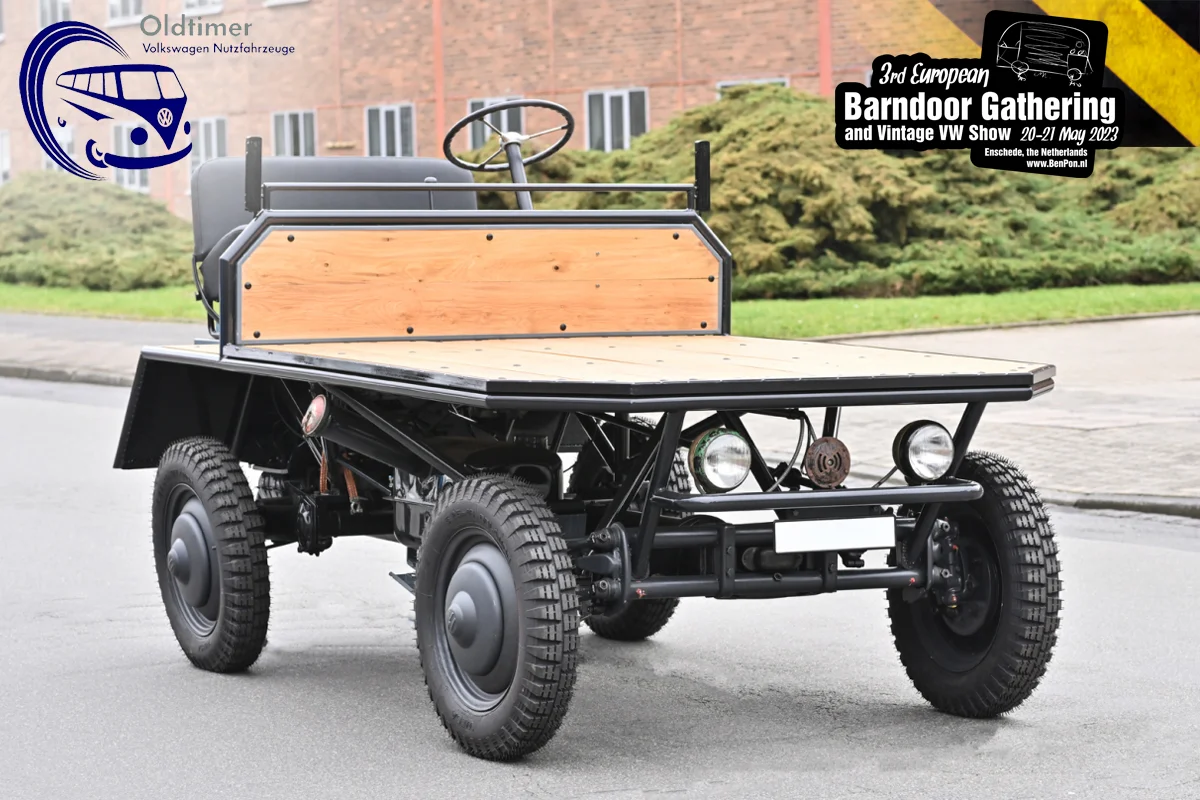
The Transporter entered the market in 1950 as ‘Typ 2’, alongside the ‘Typ 1’, the Beetle. Production started modestly with ten vans a day. However, demand was huge. As many as 8,000 were built the first year, and an additional factory was even needed in 1955. Of the first Transporter generation (T1), 1.8 million were built until 1967. This Volkswagen van grows into an icon. To this day, 13 million of them have been sold worldwide and 75 years on, the sketch is part of the Rijksmuseum's collection. After an exhibtion now in the historical library of this museum.


-
Niftyons
- Posts: 423
- Joined: Mon Oct 18, 2021 5:45 pm
Voitures Anciennes
My uncle was in the army from before ww2 started until abt. 1960. He spent his last years of service in Germany and retired to a bungalow near Stonehenge. I remember going to see him and his family. He had a VW that looked very similar to the one in pictured in the first link in the post above in his garage.
-
RobertArthur
- Posts: 2913
- Joined: Sat Jul 17, 2021 3:10 pm
- Location: Nièvre
Voitures Anciennes
Beam me back in time to San Francisco around 1970, Scotty.... Be sure to wear some flowers in your hair...
Sightseeing also closer to home, still on the road today, cheaper than cheap flights across the Atlantic.


Sightseeing also closer to home, still on the road today, cheaper than cheap flights across the Atlantic.
-
RobertArthur
- Posts: 2913
- Joined: Sat Jul 17, 2021 3:10 pm
- Location: Nièvre
Voitures Anciennes
Keep them rolling. Not an original Wllys. After World War II the Royal Duch Army initially used jeeps from US dump stocks. Not an unlimited supply chain. Time for something new. The Willys M38A1 from Willys-Overland was chosen. The total order amounted to 4,000 units. Because of the economic position of the Netherlands, it was agreed that the vehicles would be assembled at Nekaf and that parts from Dutch suppliers would also be used. The Nekaf Jeep, initially assembled at Nekaf in Rotterdam and later at Kemper & Van Twist of Dordrecht was used with the Royal Netherlands Army until the 1990s. A total of about 7500 were built. It was originally a 1952 design by Willys-Overland and is also referred to as Willys MD. The Dutch version differs from the standard M38A1 in having the distinctive convex indicators on each side, which are protected by an iron bracket.
Also in action in France from 1959-1964, in this village with a military training area, for many boys their first visit to France, a real French village, interesting French vehicles. So much to see, old and young. So much action after sunset. Only one problem: timing. The next day, after a countryside tour, another problem: what am I going to write to my girlfriend, friends or parents?
One of my French neighbours, Denis, had the French version of the Jeep, assembled by Hotchkiss in Paris. Engine overhaul and after a finishing touch with the help of this friend of mine and a bit of rewiring (lying on my back), removing many layers of paint trying to identify the hidden colours, we went for a test-drive. The road-holding and comfort of the fifties, a little truck. Above all: a perfect off-road vehicle. More about the Hotchkiss jeep, in English.
Pictured below: the Nekaf jeep.


Also in action in France from 1959-1964, in this village with a military training area, for many boys their first visit to France, a real French village, interesting French vehicles. So much to see, old and young. So much action after sunset. Only one problem: timing. The next day, after a countryside tour, another problem: what am I going to write to my girlfriend, friends or parents?
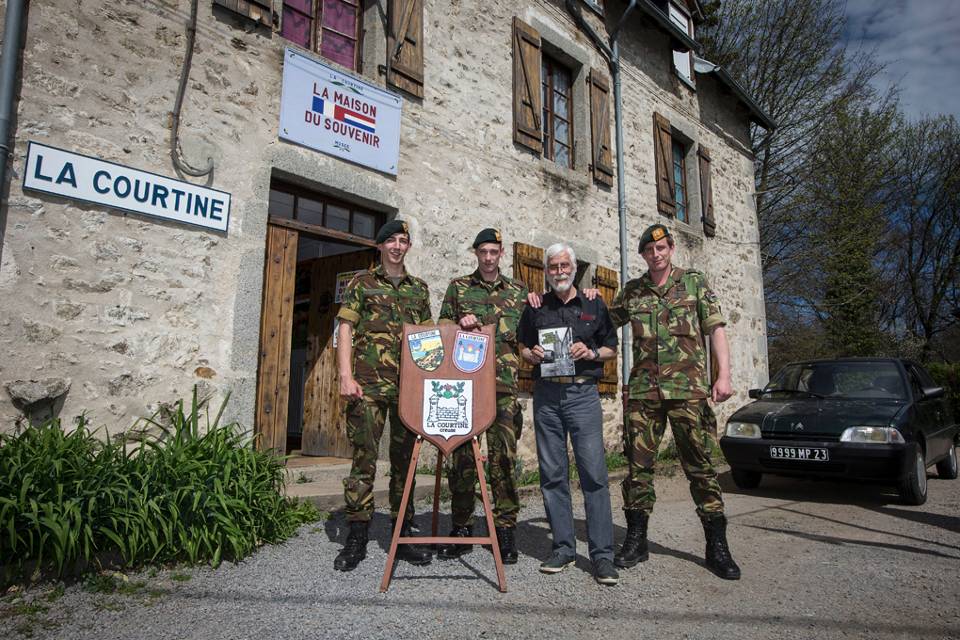
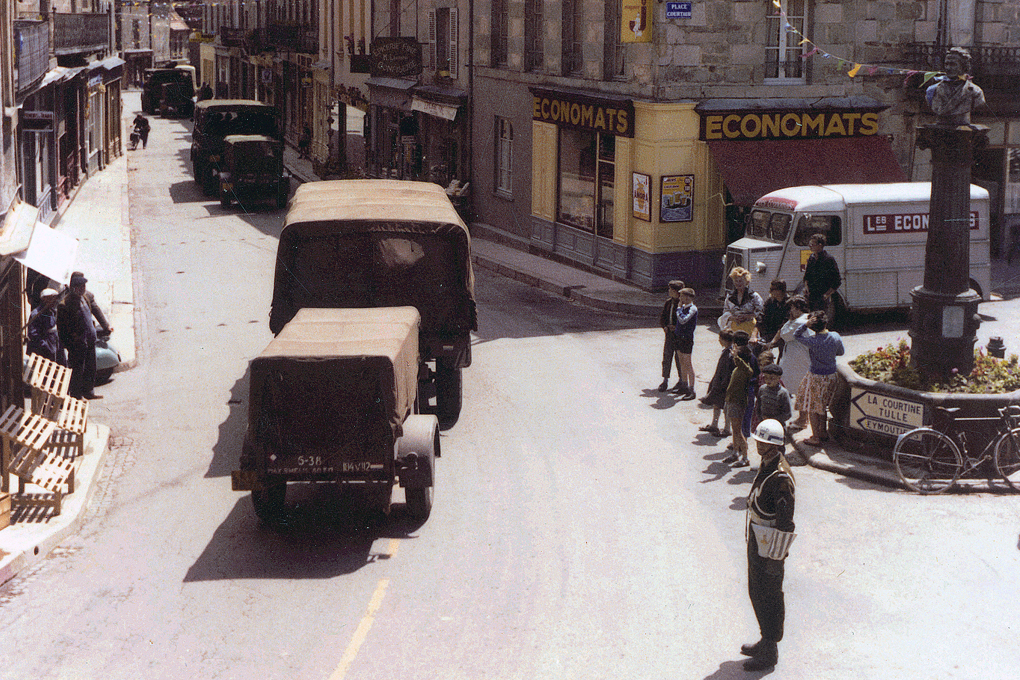


One of my French neighbours, Denis, had the French version of the Jeep, assembled by Hotchkiss in Paris. Engine overhaul and after a finishing touch with the help of this friend of mine and a bit of rewiring (lying on my back), removing many layers of paint trying to identify the hidden colours, we went for a test-drive. The road-holding and comfort of the fifties, a little truck. Above all: a perfect off-road vehicle. More about the Hotchkiss jeep, in English.

Pictured below: the Nekaf jeep.
-
Liz

- Posts: 948
- Joined: Thu Aug 05, 2021 7:41 am
- Location: SW France
Voitures Anciennes
The odd one out.
As I'm always driving a classic I don't realise how odd/cute/weird/fabulous it appears to others.
My trav in a sea of modern cars at the Pont de Chaume hospital complex in Montauban.
As I'm always driving a classic I don't realise how odd/cute/weird/fabulous it appears to others.
My trav in a sea of modern cars at the Pont de Chaume hospital complex in Montauban.
You do not have the required permissions to view the files attached to this post.
How do people live without at least one dog in the house?